


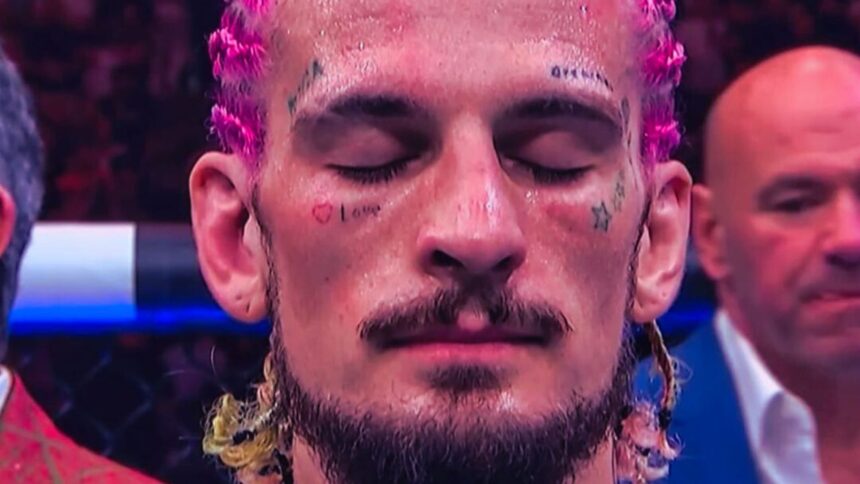
The coach of Sean O’Malley wants significant changes to UFC rules regarding combat exploitation of fighters like Aljamain Sterling.
Tim Welch, the coach of Sean O’Malley, has emerged as a well-known figure in the mixed martial arts (MMA) world, pushing for rule modifications to the UFC that could fundamentally transform how matches are fought—and won. Welch has specifically focused on a few rules that he feels competitors like Aljamain Sterling take advantage of to obtain an unfair advantage in the octagon. His remarks are relevant to the current discussion of how MMA rules can occasionally prioritise safety over activity and perhaps even provide combatants the ability to game the system for their own gain.
The Complicated MMA Rules: Safety vs. Strategy
In mixed martial arts, the rules are far from standard. Rules vary slightly throughout organisations, and this has long been a contentious issue in the sport. Consider ONE Championship, which permits 12-6 elbows and knees to opponents who are grounded, whereas the UFC prohibits similar techniques. On the other hand, because they represent such serious safety dangers, certain manoeuvres, such headbutts, groin strikes, and eye pokes, are strictly prohibited in all major promotions. But the thing that annoys some fighters and coaches the most—and Tim Welch is no different—is the tactical application of certain rules.
Welch identified two crucial UFC regulations that he thinks should be altered in order to stop fighters from taking advantage of the system during a recent episode of his YouTube podcast: upkicks to a grounded opponent and the “safe” front headlock position. Welch claims that fighters like Sterling, who deftly utilise these circumstances to escape damage or rest during a bout, have taken advantage of both of them.
The Upkicks Debate: A Weapon for Fighting?
When executed from the ground to a standing opponent, upkicks are allowed in the UFC and have been known to produce stunning knockouts. In the UFC, opponents were notably knocked out with upkicks delivered by Niko Price and Jon Fitch. However, when the opponent is grounded—that is, when they are seated or have both legs on the canvas—then these attacks are prohibited. Welch claims that this grey area has developed into a way for boxers to escape punishment during a battle.
Welch fervently contends that the UFC should allow upkicks to opponents who are grounded. He brought up an incident in which Luana Pinheiro was seated on the ground and Randa Markos was disqualified for giving her an upkick. This instance demonstrates the dissatisfaction that some fighters and coaches have with the rules, even though it is a textbook example of an unlawful manoeuvre. The rules can slow down the speed of the fight or even allow a fighter to take advantage of the circumstance to avoid further attacks.
Front headlocks’ “Rest Zone”: A Fighter’s Safe Haven?
The additional guideline The “front headlock” position, which has evolved into a tactical rest area for fighters, is one of Welch targets. As long as a fighter is deemed “grounded”—that is, with at least one knee hitting the ground—and attempts a takedown and ends up in a front headlock, their opponent is not permitted to strike them with knees to the head.
Welch made the observation that Aljamain Sterling in particular has a well-known history of abusing this regulation. When Sterling attempted a takedown in his bout with Henry Cejudo, he would instantly get to his knees, so protecting himself from head kicks. Welch feels that this tactical move unfairly tips the scales in favour of the fighter who launched the unsuccessful takedown attempt by giving him more time to recover or reset.
“If some fg guy’s on top of you, on his knees, whatever, you should be able to upkick him to his fg lips,” stated Welch himself. His tone conveys a sense of anger that these so-called “safe” postures are turning into a way for fighters without the wrestling or striking advantage to control the fight to take control of the match.
Aljamain Sterling’s Case: An Expert in Abuse?
Welch appears to be specifically targeting fighter Sterling, who has received backlash for his methods in winning and holding the UFC bantamweight title. After Petr Yan was disqualified for taking an improper knee while Sterling was grounded, Sterling’s maiden championship victory transpired in a contentious manner. The event spurred discussion over whether Sterling overstated the consequences of the unlawful strike in order to guarantee Yan’s disqualification.
Welch thinks Sterling employed comparable strategies to take advantage of the grounded fighter rule in his matchup with Cejudo. Sterling gave Cejudo time to recuperate and plan by holding him in a front headlock with his knees on the ground and preventing him from landing any significant attacks. According to Welch, this is not simply a cunning manoeuvre, but also a manipulative one that goes against the essence of mixed martial arts as a combat sport.
Are These Rules Up for Change by the UFC?
Now, the most important query is: Should the UFC pay attention to Welch and other detractors who want these regulations altered? On the one hand, the main purpose of UFC regulations is to protect fighters. For example, striking a grounded opponent with a knee could result in serious brain damage; striking a fighter who is on the ground could do the same.
However, mixed martial arts (MMA) takes pride in being the most comprehensive kind of fighting, where any strategy can be applied within the guidelines to defeat an opponent. Welch contends that when those regulations start to encourage stopping or resting, they run the risk of diluting the spirit of the sport—which is a genuine test of stamina, ability, and resolve.