


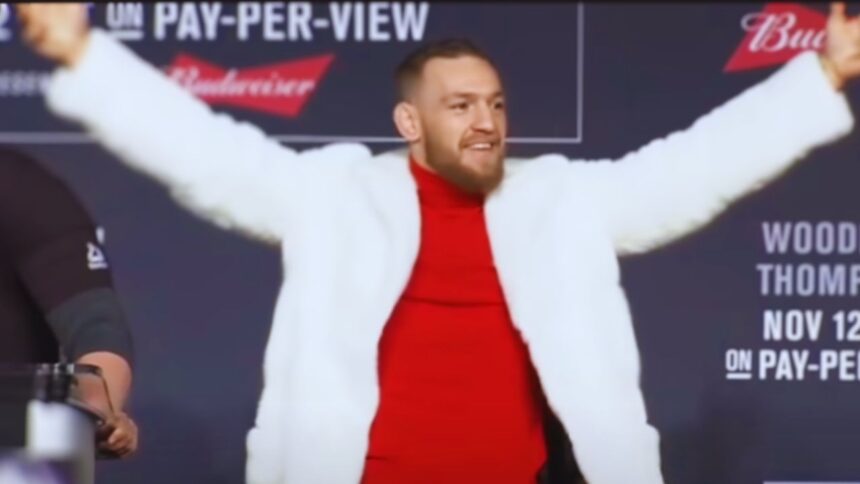
In a recent interview with “Piers Morgan Uncensored,” UFC CEO Dana White opened up about Conor McGregor’s recent struggles in the octagon and the impact of wealth on an athlete’s drive.
Conor McGregor, a former dual UFC champion, has faced a challenging period in his MMA career, losing three of his last four fights, including two back-to-back losses to Dustin Poirier, with the most recent defeat being a doctor’s stoppage TKO due to a leg injury in July 2021.
McGregor (22-6 MMA, 10-4 UFC) recently coached “The Ultimate Fighter Season 31” alongside Michael Chandler (23-8 MMA, 2-3 UFC), and a highly anticipated bout between the two was expected. However, the fight has yet to be scheduled, primarily because McGregor has not re-entered the USADA testing pool, a prerequisite for UFC competition. Dana White predicts McGregor will make his return to the octagon in 2024.
“He is back in the gym. He’s training,” White stated. “I expect to see Conor fighting next year.”
McGregor’s journey to becoming one of the biggest and wealthiest stars in the UFC involved winning a second UFC belt with a dominant performance against Eddie Alvarez, a high-profile boxing match with undefeated Floyd Mayweather, and the successful launch of his Proper No. Twelve whiskey brand, which he later sold for a significant sum.
As McGregor’s financial success skyrocketed, White believes it has become increasingly challenging for the fighter to maintain the same level of motivation and dedication to training.
“Here’s what happens, Piers, and you know this – I’m sure you’ve seen this with colleagues and friends and people that you know,” White explained. “Once a certain level of money is attained, to be the person that you were coming up, to be that hungry and work that hard and be that dedicated to the sport, or whatever craft it is you do, money changes everything. Conor McGregor has made that kind of money. It’s not a knock. It’s just a fact.”
White drew parallels between McGregor’s situation and the broader trend in combat sports, noting that fighters who achieve immense wealth often fight less frequently or face losing streaks, as their motivations evolve and they adapt to their newfound financial security.
“When we sold the company in 2016, this was sort of a Microsoft of fighting. There were a lot of people that made a lot of money, and a lot of people left and they went and retired, or moved onto – you have to have a certain type of drive to make that kind of money, and you’ve seen guys in this sport when they make that kind of money, they’ll fight a lot less like Conor has, or they go on losing streaks because you are not that same person once you get that kind of money.”