


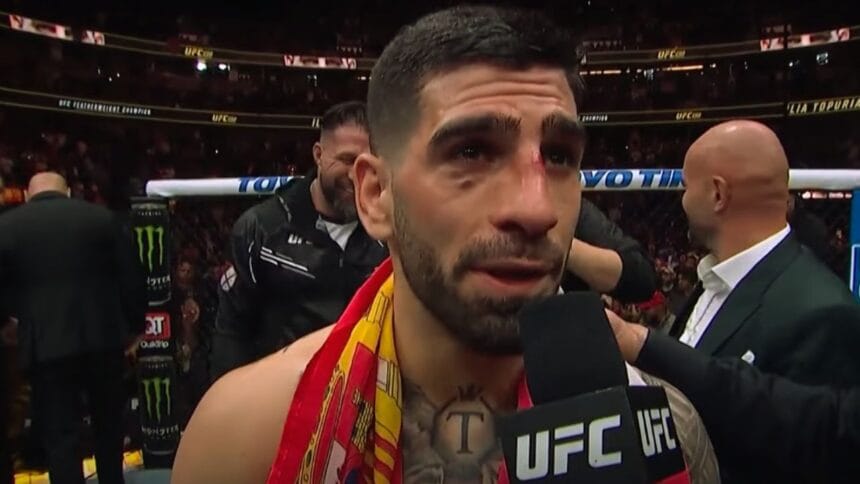
The Featherweight Phenom
In the aftermath of UFC 298, where Ilia Topuria delivered a thunderous knockout to dethrone Alexander Volkanovski, the MMA world is abuzz with speculation: Is Topuria destined to become the next long-reigning champion? At just 27 years old, Topuria’s victory places him squarely in the prime of his career, poised to dominate the featherweight division for years to come.
Comparing Topuria’s age at his championship win to past champions like Volkanovski, Max Holloway, and Jose Aldo, a clear pattern emerges. Topuria’s youth, coupled with his undeniable talent and athleticism, positions him as a formidable force in the division. However, as history has shown us time and again, maintaining a championship reign in MMA is a Herculean task.
As eloquently stated by Avon Barksdale in The Wire, the margin for error in defending a title is razor-thin. One misstep, one moment of weakness, and the reign can come crashing down. Every challenger presents a unique threat, and the longer one holds the title, the more strategies opponents develop to dethrone them.
While Topuria’s future looks bright, it would be premature to crown him the GOAT just yet. The road to greatness is fraught with challenges, and only time will tell if he can navigate it successfully. With potential matchups against the likes of Holloway and Movsar Evloev on the horizon, Topuria will need to summon his best to cement his legacy as a true champion.
The Division of Kings
Reflecting on the lineage of UFC featherweight champions, from Jose Aldo to Conor McGregor to Topuria, one thing becomes abundantly clear: Featherweight is the division of kings. With a roster boasting top-tier talent and iconic champions, the featherweight division has captured the imagination of fans worldwide.
While some may argue that other divisions hold greater historical significance or excitement, none can rival the sheer star power and skill on display in the featherweight ranks. With Topuria now at the helm, there’s a palpable sense of anticipation for what the future holds for this storied division.
A Missed Opportunity
Amidst the euphoria of Topuria’s victory, UFC President Dana White made a significant announcement regarding UFC 300’s main event: Alex Pereira vs. Jamahal Hill. However, the announcement was met with underwhelming reception, with many fans left disappointed by the lack of a marquee matchup befitting such a milestone event.
White’s decision to reveal the main event immediately after UFC 298 speaks volumes about the promotion’s awareness of its shortcomings. While Pereira vs. Hill is undoubtedly an intriguing matchup, it fails to capture the grandeur and spectacle expected of a landmark event like UFC 300.
Furthermore, the timing of the announcement raises questions about the UFC’s long-term planning and strategic foresight. With UFC 301 set to take place in Brazil just weeks after UFC 300, the absence of Brazilian champions in the main event lineup feels like a missed opportunity to capitalize on regional fanfare and excitement.
In hindsight, it’s evident that the UFC’s failure to plan ahead has resulted in a suboptimal main event for UFC 300. As fans eagerly await further developments, there’s a sense of disappointment lingering over what could have been a truly historic occasion.
As the dust settles on UFC 298 and anticipation builds for UFC 300, the MMA world finds itself grappling with a myriad of questions and uncertainties. Will Ilia Topuria emerge as the next long-reigning champion? Can the featherweight division maintain its status as the division of kings? And will the UFC learn from its mistakes and deliver a main event worthy of the historic milestone that is UFC 300?