


Concerns Arise Regarding Volkanovski’s Quick Return After Knockout Defeats
The recent struggles of Alexander Volkanovski inside the Octagon have sent shockwaves through the mixed martial arts community. The UFC featherweight champion, known for his resilience and skill, found himself on the wrong end of back-to-back knockout losses, a rare occurrence in his otherwise illustrious career. Following these unexpected setbacks, questions began to surface about whether Volkanovski had returned to competition too soon after his initial defeat.
The first blow came in October when Volkanovski, ever the warrior, accepted a short-notice fight against Islam Makhachev. Despite the limited preparation time, Volkanovski entered the cage with his trademark determination. However, fate dealt him a cruel hand as Makhachev connected with a devastating head kick, sending shockwaves throughout the MMA world.
Just four months later, Volkanovski faced yet another formidable opponent in Ilia Topuria. Hopes were high for the champion’s comeback, but once again, fate intervened as Topuria unleashed a barrage of punches, culminating in a second-round knockout. The loss not only cost Volkanovski his UFC featherweight title but also raised concerns about his well-being and readiness to compete at the highest level.
Matt Brown’s Insightful Commentary
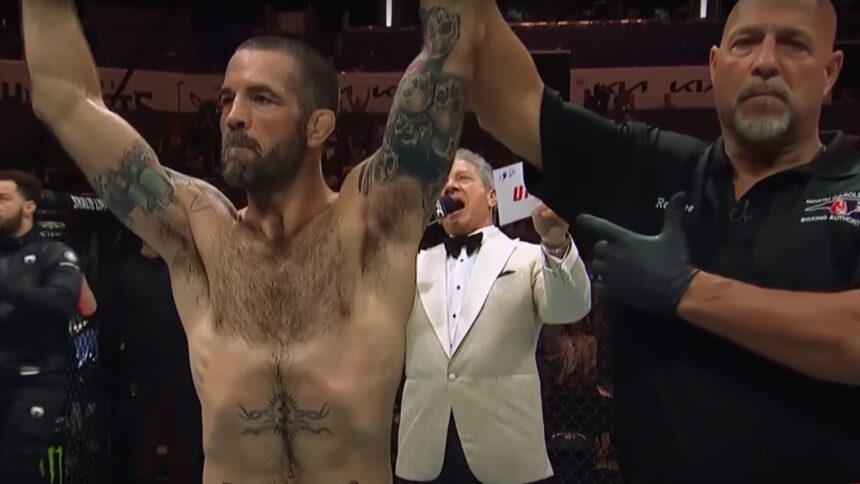
Amidst the speculation surrounding Volkanovski’s rapid return to action, UFC legend Matt Brown offered his unique perspective on the matter. With a career spanning several years and a wealth of experience inside the Octagon, Brown’s insights shed light on the complexities of combat sports and the challenges faced by athletes in their quest for redemption.
Brown emphasized that attributing Volkanovski’s losses solely to the timing of his return overlooks the intricate nature of recovery. Drawing from his own experiences, Brown recounted a personal journey marked by both triumphs and tribulations. While he had suffered a concussion during a fight with Johny Hendricks, it was the knockout loss to Donald Cerrone that left a lasting impact on his psyche.
The Mental Toll of Knockout Losses
Brown delved into the psychological toll of experiencing a knockout defeat, describing it as a uniquely challenging ordeal. Beyond the physical repercussions, the mental scars inflicted by such losses can linger long after the bruises have healed. The stigma attached to being knocked out in front of a global audience can weigh heavily on an athlete’s confidence and self-belief, affecting their approach to training and competition.
Contrasting his experiences with concussions and knockouts, Brown highlighted the distinct challenges posed by each form of trauma. While physical recovery from a concussion may be manageable, the psychological aftermath of a knockout requires a nuanced approach and unwavering resilience.
Individualized Approaches to Recovery
As speculation mounts about Volkanovski’s future in the UFC, Brown cautioned against prescribing a one-size-fits-all approach to recovery. He emphasized the importance of understanding each athlete’s motivations, goals, and psychological makeup before offering advice. What works for one fighter may not necessarily work for another, underscoring the need for personalized strategies tailored to the individual.
Navigating the Road to Redemption
As Alexander Volkanovski embarks on his journey back to the Octagon, the lessons learned from Matt Brown’s insights serve as a guiding light in navigating the road to redemption. While the path may be fraught with challenges and uncertainties, one thing remains clear: resilience and determination are the hallmarks of a true champion. As Volkanovski seeks to reclaim his status atop the featherweight division, the MMA world watches with bated breath, eager to witness his triumphant return.