


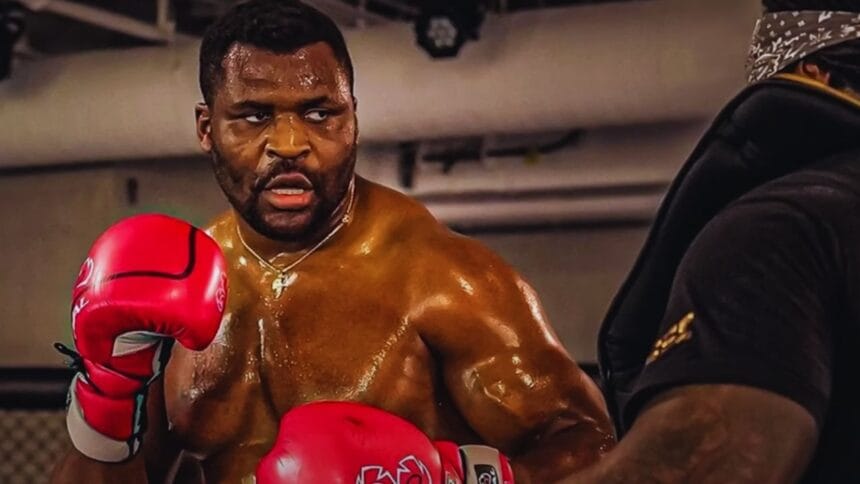
In the world of combat sports, every fight tells a story—a tale of triumph, adversity, and unwavering determination. Francis Ngannou’s recent bout against Anthony Joshua in Riyadh, Saudi Arabia, is no exception. As the dust settles on the ring and the echoes of the final bell fade away, Ngannou takes a moment to reflect on his performance, his journey, and the lessons learned along the way.
The anticipation leading up to the fight was palpable. Ngannou, known for his devastating power and relentless aggression in the MMA world, ventured into the realm of professional boxing with aspirations of glory. His opponent, Anthony Joshua, a towering figure in the boxing world, posed a formidable challenge—one that Ngannou eagerly embraced.
The opening bell heralded a titanic battle that would ultimately put Ngannou’s resolve to the test in ways he could never have predicted. Ngannou tried his hardest, but Joshua’s brutality sent him sprawling to the canvas as the fight took an unexpected turn. A cruel turn of events caused him to lose out on victory, leaving him to bitterly taste defeat.
Yet, amidst the disappointment and heartache, Ngannou refuses to dwell on what could have been. He stands firm in his conviction that he has no regrets about his performance. “I really don’t see a thing that I should have done differently,” Ngannou asserts, his voice tinged with a sense of quiet resolve.
For Ngannou, the journey towards the fight was as significant as the outcome itself. Months of grueling training, sacrifice, and unwavering dedication culminated in that pivotal moment in the ring. Every early morning run, every punishing sparring session, and every ounce of sweat shed in the gym was a testament to his commitment to excellence.
The decision to switch to Southpaw during the fight—a move that drew criticism from pundits and fans alike—was a calculated risk that Ngannou stands by wholeheartedly. “Even in Southpaw, my defense is more sharp than orthodox,” he explains. Despite the outcome, Ngannou remains steadfast in his belief that every decision made in the ring was a reflection of his training and preparation.
In the aftermath of the fight, voices from all corners of the combat sports world weighed in on Ngannou’s future. Some questioned his ability to compete in the world of boxing, while others urged him to return to the familiar confines of MMA. Yet, amidst the noise and chatter, Ngannou remains undeterred, his spirit unbroken.
“It doesn’t bother me,” Ngannou says of the criticism. “I don’t mind that much what people say, because they will always have something to say.” For Ngannou, the opinions of others pale in comparison to his own unwavering belief in himself and his abilities.
As Ngannou looks towards the future, he does so with a renewed sense of purpose and determination. The loss against Joshua serves not as a setback but as a stepping stone towards greater heights. With each defeat comes an opportunity for growth—a chance to learn, adapt, and evolve.
In the end, Ngannou’s journey is not defined by the outcome of a single fight but by the resilience of his spirit and the fire that burns within him. As he continues to chart his course in the world of combat sports, one thing remains abundantly clear: Francis Ngannou is a force to be reckoned with, both inside and outside the ring.