
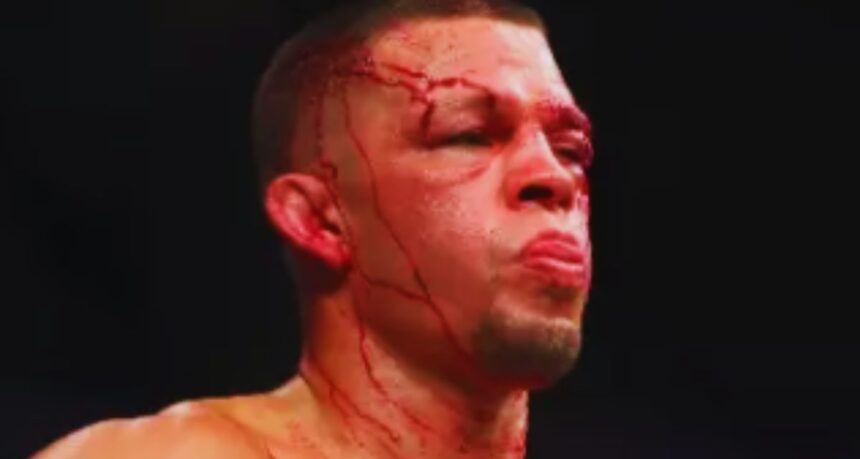
In a stunning revelation that sent shockwaves through the MMA world, former champion Josh Thomson has come forward, claiming that Nate Diaz turned down a substantial offer of hush money from the UFC to conceal his failed drug test. Diaz, a renowned fighter with a devoted fan base, allegedly refused to let the UFC sweep his doping controversy under the rug in order to protect the integrity of the sport.
The saga unfolded in the lead-up to the much-anticipated clash between Nate Diaz and Jorge Masvidal at UFC 244 in November 2019. Diaz, a seasoned fighter with a record of 21 wins and 13 losses, faced Masvidal, a formidable opponent with 35 victories and 17 defeats. The stakes were high, as the winner would be crowned the “BMF” champion.
However, as the fight approached, an unexpected twist occurred. Diaz’s name was tarnished by a failed drug test, a revelation that could have derailed the entire event. It is at this juncture that Thomson’s claims come to light. According to Thomson, the UFC offered Diaz a substantial sum of money to keep the failed drug test a secret until after the fight.
Thomson shared his thoughts on the ‘Weighing In’ podcast with John McCarthy, saying, “I look at it this way, this is the thing. Look what they were trying to do with Nate Diaz. He tested positive, and they were like, ‘You know what, we’ll get it all sorted out after.’ And Nate said, ‘F**k you, we will get it sorted out now.’ That means that they knew that Nate tested, and they were still going to let him fight… So I would not say that they have not tried to do that, or would not do it.”
The shadow of a similar controversy looms large in the history of the sport. Mark Hunt’s lawsuit against the UFC, Dana White, and Brock Lesnar alleged that the promotion was aware of Lesnar’s use of performance-enhancing drugs (PEDs) before their UFC 200 showdown. Hunt’s claims ultimately fell short in court.
Thomson’s claims raise significant questions about the ethics and transparency of the UFC. He noted that the situation with Nate Diaz serves as a precedent where the promotion seemed willing to allow a fighter with a failed drug test to compete and address the issue later. Thomson even revealed that there were attempts to offer money to Diaz’s camp to ensure that the fight went ahead without public knowledge of the test results.
Nate Diaz, in fact, tested positive for a banned substance in October 2019, but the situation was eventually attributed to tainted supplements used by the fighter. Diaz’s insistence on addressing the issue immediately prevented any potential cover-up by the UFC.
Thomson’s allegations have sparked a wider debate within the MMA community about the power dynamics between fighters and the promotion. The question on everyone’s mind is whether the UFC has the authority to ‘sort out’ failed drug tests and potentially offer financial incentives to keep controversies under wraps in the name of preserving the spectacle of the sport.
Thomson’s claims have put the UFC under a glaring spotlight, raising questions about the transparency and integrity of the organization. While it’s crucial to remember that Nate Diaz’s situation ultimately turned out to be a case of tainted supplements, the allegations of hush money and the precedent it sets for handling such issues deserve serious scrutiny.
In the ever-evolving world of MMA, transparency is paramount to maintaining the sport’s credibility. The UFC, as the leading promotion, should prioritize the clean and fair competition that fans and fighters alike expect. While allegations of hush money remain unproven, they underscore the need for enhanced transparency and accountability in dealing with failed drug tests to ensure the integrity of MMA is preserved.